
Relatives need access to the crypto of someone who died or can no longer manage it
Published: Last reviewed: Editorial policy
When a person dies or can no longer manage their affairs, family members often cannot find or open their crypto. The lawful route runs through legal documents, a search for wallets and exchange accounts, and the exchange's own deceased-account process. Independent lawyers and technical specialists do the legal and technical work. We coordinate them. We do not hack, guess passwords or bypass security.
Questions about your case? Message us:
Technical work on this service is done by independent partner specialists. We vet them, coordinate the case and stay your single point of contact.
This is for you if
- A relative died and you suspect they held crypto but you do not know where
- You know of an exchange account but the platform asks for documents you cannot supply
- A family member lost capacity and you need lawful access to manage their assets
- You are an executor or administrator and need a plan for digital assets
Typical situations
- Deceased relative with an exchange account and no known password
- Hardware wallet found among belongings, with no PIN or seed
- Emails or bank records that hint at crypto purchases, but no wallet list
- Exchange refusing to talk to family without a court order or grant
- Family member with dementia or after a stroke who managed crypto alone
- Encrypted wallet file on an old computer in the estate
What we do
- Map what may exist
We help you go through emails, bank statements, devices and papers for signs of exchange accounts, wallets and purchases. We build a list of platforms to approach and a list of items that may need technical help.
- Clarify the legal authority you need
Exchanges generally ask for proof of death, proof of your authority, such as a court grant or power of attorney, and identity documents. Requirements differ by country. An independent lawyer confirms what your case needs.
- Approach exchanges through their formal process
We help prepare the request to each exchange's deceased-account or incapacity team, with the right documents in the right order. We keep a written record of every reply.
- Bring in independent lawyers and technical specialists
Legal steps are handled by independent licensed lawyers. If a wallet file or a device is involved, independent partner specialists may try lawful access. We vet them and coordinate the work.
- Document and secure the assets
Once assets are found, we help you record them for the estate, move them to wallets the rightful owner controls and keep a clear audit trail for the executor, the family and any tax adviser.
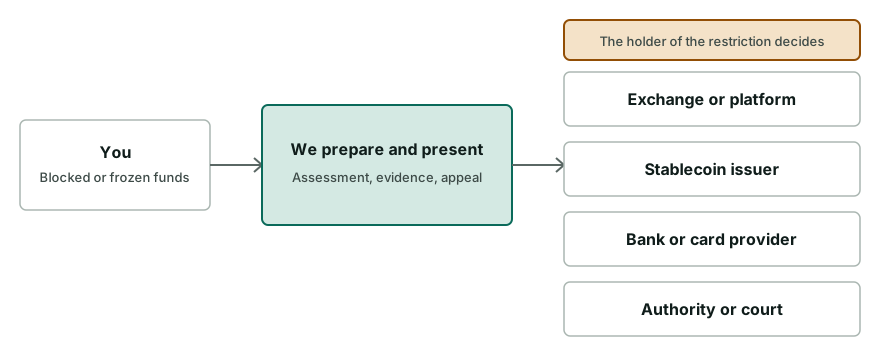
How the case runs
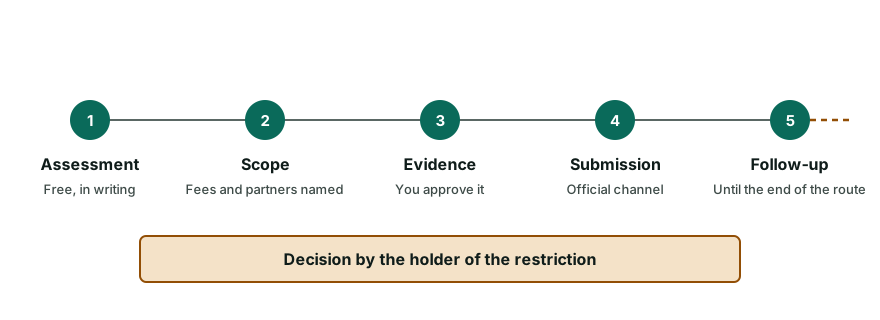
- Free assessment
Tell us who the person was, what you know and what papers you hold. We reply in writing on what looks possible, what the first legal step may be and whether we can help.
- Scope and introductions
If we go ahead, we send a written scope and fee model and introduce the independent lawyer and specialists involved. You agree terms with each of them directly.
- Search and legal groundwork
You gather documents through a secure channel. The lawyer confirms the authority you hold or need. We assemble the list of platforms and devices to approach.
- Requests to platforms and technical work
We send requests to the exchanges and, if needed, pass devices or files to a specialist under written terms. You get copies of all correspondence.
- Handover to the estate
We summarise what was found and what was not, and help the executor or family record and secure the assets. We then close the case.
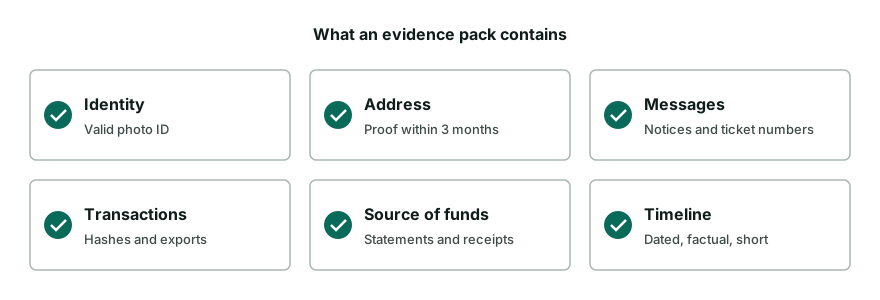
What to prepare
- Death certificate or medical proof of incapacity, as appropriate
- Proof of your authority: court grant, will, letters of administration or power of attorney
- Your government photo ID and proof of address
- Proof of relationship to the person, where the platform asks for it
- Emails, bank statements and devices that may point to exchanges or wallets
- Any known account names, email addresses or phone numbers used for crypto
- A list of devices, hardware wallets, wallet files and paper notes found
What we cannot do
- We cannot force an exchange to release accounts, and we do not promise that any crypto will be found. Some assets are simply unreachable without keys.
- We do not hack accounts, guess passwords or bypass security. We work only through lawful access and the platform's own process.
- Legal advice comes from independent licensed lawyers, not from us, and the rules differ by country.
- We will never ask for a seed phrase, private keys or passwords belonging to you or to the deceased.
How long it takes
Estate and incapacity cases follow legal timelines and platform queues, and can take months. Searching for assets may be quicker than getting an exchange to release them. We give an estimate after the assessment and revise it as the case moves.
Fees
Our assessment is free. Lawyers and technical specialists set their own fees, and some technical work in this field is success-based, but terms vary. Every fee is set in writing before work starts, and we ask for no fee before we say whether we can help. Fees →
Questions people ask
How do I get access to a deceased person's crypto?
Start with the law and the paperwork. You usually need proof of death and proof of your authority, then you approach each exchange through its process. If wallets are self-held, you need the keys or a lawful technical route.
What if I do not know where the crypto is?
Look for clues: exchange emails, bank transfers to crypto firms, apps on phones, hardware devices and handwritten notes. Finding a list of platforms is often the first real step. Some assets may never be found.
Will an exchange talk to me as a relative?
Often only after you provide legal documents. Many exchanges have a deceased-account process that asks for a death certificate and proof of your authority. Without those, they usually cannot share details because of privacy rules.
Can you open the wallet without the password?
Not by hacking. If a wallet file or device is part of the estate, independent specialists may try lawful recovery, but success is not assured. If both the keys and the password are lost, access may be impossible.
Do I need a lawyer for this?
Usually yes. Authority over an estate or an incapacitated person is a legal matter, and the rules differ by country. An independent licensed lawyer confirms what you need, and we coordinate the rest.
How can I protect my own family from this problem?
Keep a secure record of where your crypto is, and tell a trusted person how to find it, without writing seed phrases in plain notes. Consider legal advice on a will or a power of attorney that covers digital assets.
Related situations
- Wallet password and file recovery. Forgotten password or damaged wallet file: vetted independent specialists try recovery.
- Hardware wallet recovery help. Lost PIN, broken or lost hardware wallet: honest options and vetted independent labs.
- Source of funds and source of wealth packs. Build a clear source of funds and source of wealth pack for exchanges, banks and processors.
- Exchange account unblocking. Understand the freeze, prepare KYC/AML evidence, answer compliance and appeal.
Read next
Information on this page is general and not legal advice.