
Complaint to a financial regulator or ombudsman over a crypto platform: how to prepare it
Published: Last reviewed: Editorial policy
A complaint to a financial regulator or ombudsman can put pressure on a platform that ignores you, but only where such a body exists and the platform falls under its remit. That depends on your country and on the platform's licence status. A good complaint is short, dated and backed by evidence. We help you check the available routes, build the chronology and prepare the filing. We cannot make a regulator act.
Questions about your case? Message us:
This is for you if
- The platform has stopped answering and its internal complaint process has failed
- You want to know if a regulator or ombudsman covers the platform in your country
- You already wrote to a regulator but received a generic reply with no action
- You need a clean timeline and evidence pack before you complain
Typical situations
- Exchange account frozen for months with no clear reason in writing
- Platform ignored several formal complaints sent through its own channel
- Withdrawal refused after closure with no appeal route offered
- Unclear whether the platform holds a licence in your country
- Misleading marketing or fee changes that affected your funds
- Card or payment provider linked to a crypto service refused a chargeback or dispute
What we do
- Check which routes exist for your case
We look at where you live, where the platform operates and what licence it states publicly. From that we list the possible bodies, such as a financial regulator, an ombudsman, a consumer agency or a payment scheme dispute process.
- Build the chronology
We turn your messages, tickets and screenshots into a dated, numbered timeline. Each event points to a piece of evidence, so a case handler can follow the story without asking you to repeat it.
- Prepare the evidence pack
We organise statements, notices, terms of service and proof of your complaint to the platform. We remove duplicates and unrelated material, so the filing stays focused on the facts that matter.
- Draft the complaint
We write a short, factual complaint that states the problem, the harm, the steps you already took and the outcome you request. It avoids accusations we cannot support and follows the format the body asks for.
- Coordinate with a lawyer when needed
If your case needs formal legal action, such as a claim or a notice before action, we introduce an independent licensed lawyer. The lawyer works for you under their own engagement.
How the case runs
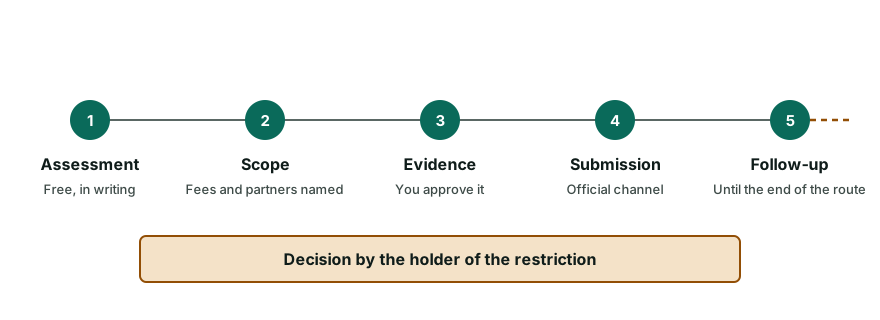
- Free assessment
Share a short summary and the platform's name. We tell you in writing which complaint routes appear to exist, how strong the file looks and whether we can help.
- Agree the scope
We send a written scope and fee model for the preparation work, and the independent lawyer involved if one is needed. You can decline at no cost.
- Collect and organise evidence
You upload your documents through a secure channel. We build the chronology and flag gaps or conflicts in dates and amounts before anything is filed.
- File the complaint
You review the final text. The complaint is filed through the body's official form or address, and you keep the confirmation and reference number.
- Track and respond
We help you answer requests from the case handler and explain each reply. We tell you plainly if the body declines the case or cannot help.
What to prepare
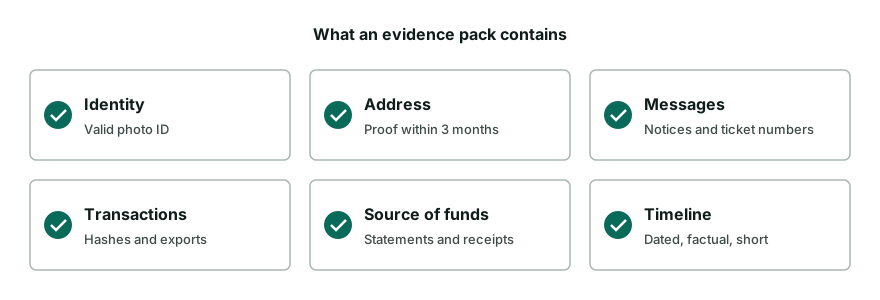
- The platform's name, registered address and any licence number it publishes
- Your account identifiers and transaction history for the relevant period
- Copies of all complaints you sent to the platform and its replies
- Terms of service and fee schedule that applied at the time
- Screenshots of the error messages, notices or restrictions
- Government photo ID and proof of address
- Bank or card statements if a payment provider is part of the dispute
What we cannot do
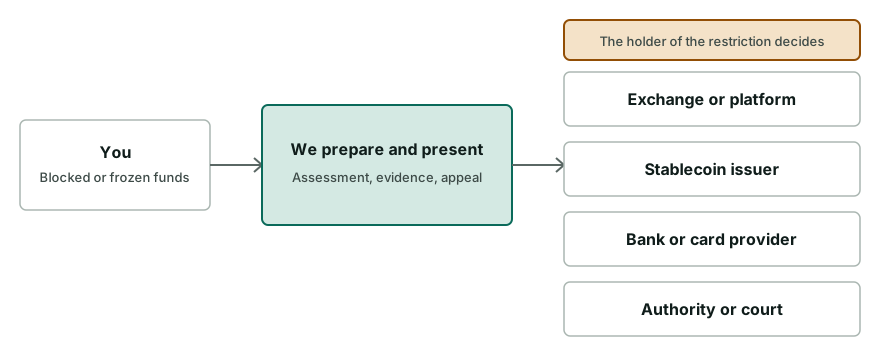
- We cannot force a regulator, ombudsman or platform to act or to decide in your favour. They decide on their own rules and powers.
- Many crypto platforms are not covered by any complaint body in your country. If that is the case, we say so early and do not promise a result.
- We do not threaten platforms or publish accusations that we cannot support with evidence.
- We will never ask for your seed phrase, private keys or account passwords.
How long it takes
Regulators and ombudsmen differ widely in speed, and some take months to respond. Preparing the complaint usually takes days, once documents are in hand. We give an estimate after the assessment and update it as the body replies.
Fees
The assessment is free. After it you receive a written scope and fee model for the preparation work. We do not request a fee before we have told you whether we can help. Fees →
Questions people ask
Can I complain to a regulator about a crypto exchange?
Sometimes. It depends on your country and on whether the exchange is licensed or registered there. Some regulators accept complaints only about firms they supervise. Others forward consumer cases to a different body. Availability varies by jurisdiction.
What is a financial ombudsman and does it cover crypto?
An ombudsman is an independent body that handles disputes between customers and financial firms. Whether crypto platforms fall within its remit depends on the country and on the platform's licence status. Some do, many do not.
Does the platform's licence status matter?
Yes. A platform that holds a licence in your country is more likely to be answerable to a regulator or ombudsman there. An unlicensed or offshore platform often sits outside these routes, which narrows your options.
What makes a complaint effective?
Clarity. State the problem in a few sentences, add a dated chronology, attach evidence for each step and say exactly what you want. Long emotional texts and unsupported accusations make a complaint easier to set aside.
Should I complain to the platform first?
Usually yes. Many regulators and ombudsmen expect you to have used the platform's own complaint process first and may ask for proof. Keep every message and the final reply, or the lack of one.
Will a regulator return my funds?
Not directly in most cases. A regulator may investigate the firm or push it to respond, and an ombudsman may issue a decision, but neither can promise the return of funds. We do not promise any outcome.
Related situations
- Exchange account unblocking. Understand the freeze, prepare KYC/AML evidence, answer compliance and appeal.
- Account closure and offboarding help. Account closed or offboarding notice with funds inside: written requests and escalation.
- Crypto card and payment account blocks. Blocked crypto card, neobank or processor account: find the trigger, document it, appeal.
- P2P trade frozen funds support. Bank or exchange froze funds after P2P trading: document the trade and appeal.
Read next
Information on this page is general and not legal advice.