
Transaction monitoring for crypto businesses: scenarios, thresholds and alert handling
Published: Last reviewed: Editorial policy
Transaction monitoring means watching customer activity for patterns that suggest money laundering, fraud or sanctions risk, then reviewing and recording each alert. For a crypto business it covers on-chain transfers as well as bank and card payments. We coordinate independent specialists who help you design scenarios, set thresholds, choose tools and write alert procedures. Your compliance officer decides on alerts and reports, and no set-up can catch every case.
Questions about your case? Message us:
This is for you if
- A crypto exchange, broker, payment or wallet business that launched without formal monitoring
- A compliance officer buried in mostly false alerts who is unsure how to document decisions
- A product team adding staking, cards or cross-border transfers that change activity patterns
- A team choosing between monitoring tools that wants requirements written down first
- Founders who must show a bank or auditor how suspicious activity is detected and handled
Typical situations
- No written rules say which activity should raise an alert, so staff decide case by case
- A monitoring tool runs on default settings and nobody knows whether the thresholds suit your customers
- Alert volumes are too high for the team, and most alerts close with a one-line note
- Deposits from wallets with indirect exposure are flagged, and there is no agreed way to treat them
- An auditor or bank found gaps in how alerts are reviewed and recorded
- You need to link on-chain screening with customer risk ratings and with travel rule data
- A new market or product is coming and the old scenarios no longer fit
What we do
- Map your activity and the risks that matter
We start with how money and crypto move through your business: deposit and withdrawal routes, customer types, countries, products and typical amounts. This shows which patterns deserve alerts and which would only create noise.
- Design scenarios and thresholds
Specialists draft monitoring scenarios, such as money in and out soon after onboarding, many transfers just under a limit, exposure to mixers or links to high-risk countries, with starting thresholds and the reasons for them. Thresholds are tested on your own history before go-live.
- Help you select and set up tools
We help you write requirements for on-chain analytics, screening and case management tools, compare options and plan a trial. We check that the data the tool needs, such as wallet addresses and travel rule fields, actually flows into it.
- Write the alert handling procedure
A clear procedure says who reviews an alert, what evidence to check, how long a review may take, how decisions are recorded and when a case goes to the compliance officer. Good notes protect your staff and show a supervisor how decisions were made.
- Tune and review over time
After go-live the specialists review alert results with you, look at false alerts and missed patterns and propose changes. Each change is logged with a date and a reason, so you can show how the system evolved.
How the case runs
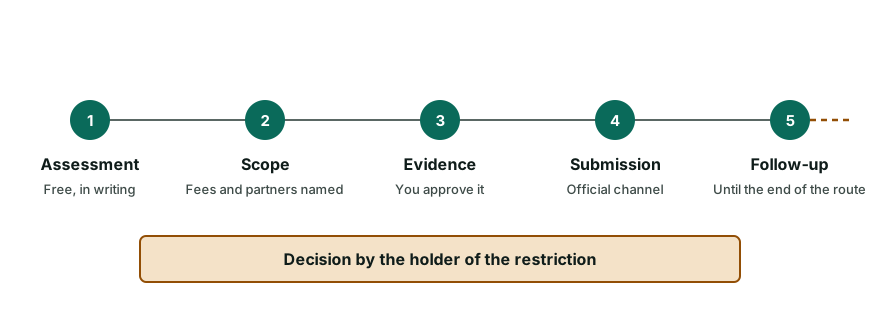
- Free assessment
You tell us what the business does and how monitoring works today. We say in writing whether independent specialists can help and which data they would need.
- Written scope and fee
You receive the scope, the specialists, the deliverables and the fee model in writing before you pay. Phases are priced separately so you can stop after any of them.
- Discovery and data review
Specialists study your flows, policies and a sample of past alerts. They list the data gaps and the scenarios worth building.
- Design and test
They draft scenarios, thresholds and procedures, then test them on your own history. We review the results with your team and adjust.
- Handover and review date
You receive the final documents, a training session for your staff and a date for the first post-launch review of alert results.
What to prepare
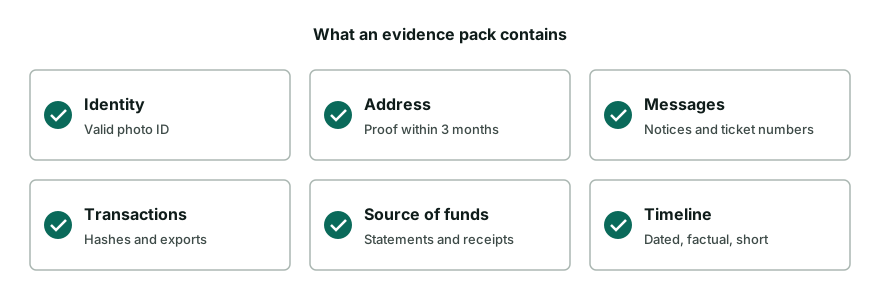
- A description of your products, customer types, countries and typical transaction sizes
- Current monitoring rules, thresholds and tool configuration, if you have them
- A sample of recent alerts and how each was closed, with personal data removed
- Alert statistics: volumes per month, share closed without action and time to close
- Your AML policy and your customer risk rating method
- The monitoring, screening and analytics vendors you use or are considering
- Findings or questions from a bank, auditor or regulator about monitoring
What we cannot do
- No monitoring set-up detects every suspicious case. We design for your risks, and we cannot promise that a scenario will catch a particular pattern.
- Your compliance officer decides on each alert and on any report to an authority. We do not review live alerts, make those decisions or file reports for you.
- We give no legal advice and we are not an auditor or a licensed officer. We cannot force a supervisor or a bank to accept your system, and we cannot predict its view.
- Tool advice follows your requirements. The purchase decision and the contract are yours, and we cannot promise that a tool will work with your data until it has been tested.
- Monitoring design works from data and procedures, so we never ask for seed phrases, private keys or passwords, and we never touch customer funds.
How long it takes
A first design for a small business can take weeks, and tuning continues after go-live, because real alerts show what the first thresholds missed. We agree the phases and review dates in the written scope.
Fees
The assessment is free. After it we quote each phase in writing, with the independent specialists' fees shown separately, so you can stop after any phase. We take no fee before we tell you whether we can help. Fees →
Questions people ask
What is transaction monitoring?
It is the ongoing review of customer activity to spot unusual or suspicious patterns. Rules or models raise alerts, a person reviews each one, records the decision and escalates where needed. For crypto it covers on-chain transfers as well as bank and card payments.
Does on-chain monitoring replace KYC?
No. KYC establishes who the customer is. Monitoring watches what they do afterwards. On-chain screening adds risk data about the wallets they use, but it cannot tell you who owns a wallet or why a payment was made.
How do we reduce false alerts?
Start from the reason for each scenario, test thresholds against your own history and group related alerts into one case. Drop rules that never lead to action and record why. Cutting alerts blindly can leave real gaps, so each change is tested and documented.
Who decides whether to report suspicious activity?
Your compliance officer or the person named in your policy. Reporting duties belong to the regulated business, and the rules differ by country. We do not make reports for you. We can help you write the internal procedure and the decision record.
What is the travel rule and how does it relate to monitoring?
It is a rule, applied in some jurisdictions, under which certain crypto businesses pass sender and recipient details with transfers. That data can feed monitoring, for example by showing who is on the other side of a transfer. Whether it applies to you depends on your jurisdiction and services.
Can you run monitoring for us?
No. We do not review live alerts or act as your compliance function. We help you design the system, choose tools, write procedures and train your team. Day-to-day alert review stays with your staff or a provider you contract with directly.
Related situations
- AML compliance consulting for crypto businesses. Independent specialists help you write or review AML policies and your risk assessment.
- Due diligence and risk assessment for crypto firms. Written, evidence-based checks on counterparties, customers and wallets, with a clear risk rating.
- Wallet screening and risk flag disputes. High-risk address flag from screening tools: document the path of funds and challenge it.
- Blockchain analytics report. A source-of-funds report from transaction tracing, ready for a compliance team.
Read next
Sources
Official or authoritative pages this page is based on. Pages change, so check the source for the current wording.
- Guidelines amending the ML/TF Risk Factors Guidelines (EBA/GL/2024/01) · European Banking Authority
- Guidelines on information requirements in relation to transfers of funds and certain crypto-assets transfers · European Banking Authority
- Application of FinCEN's Regulations to Certain Business Models Involving Convertible Virtual Currencies (FIN-2019-G001) · Financial Crimes Enforcement Network (FinCEN)
Information on this page is general and not legal advice.